How AI Automation Helps Small Businesses Generate More Leads and Save Time

Table of contents
H2 — Why Small Businesses Are Turning to AI Automation
Running a small business often means handling multiple responsibilities at once. From finding new customers and responding to inquiries to managing CRM data and following up with prospects, repetitive tasks can quickly consume valuable time.
AI automation allows businesses to automate many of these processes while keeping important human interactions in place.
Instead of manually checking every lead, sending every follow-up email, or updating customer information, businesses can build automated workflows that handle these repetitive tasks continuously.
The result is a more organized sales process, faster response times, and more time for the team to focus on high-value work.
H2 — What Is AI-Powered Lead Generation?
AI-powered lead generation combines artificial intelligence, automation, and business data to identify and manage potential customers.
A typical workflow can:
Find potential customers based on specific criteria
Collect business and contact information
Analyze websites and online presence
Identify potential problems or opportunities
Enrich lead information
Organize leads inside a CRM or database
Send personalized outreach
Track responses and engagement
Trigger follow-ups automatically
Rather than relying entirely on manual prospecting, businesses can create a structured system that continuously moves leads through the sales pipeline.
H2 — How AI Automation Can Improve the Sales Process
AI automation can support several stages of the customer acquisition process.
H3 — Automated Lead Collection
Businesses can automatically collect potential leads from relevant online sources and organize them into a centralized database.
This eliminates the need to manually copy information from different platforms and spreadsheets.
H3 — Lead Qualification
Not every lead has the same potential.
AI can analyze information such as business type, location, website quality, services, and other predefined criteria to help prioritize prospects.
Sales teams can then spend more time reviewing the leads that match their target customer profile.
H3 — Personalized Outreach
Generic messages often feel like spam.
AI-assisted automation can use information about a business to create more relevant outreach messages. For example, a message can reference a specific website issue, business service, or potential improvement.
The goal is not to send more messages. The goal is to make each relevant interaction more useful.
H3 — Automated Follow-Ups
Many potential customers do not respond to the first message.
A properly designed workflow can automatically schedule follow-ups while respecting predefined limits and delays.
This helps businesses maintain consistent communication without requiring someone to manually remember every follow-up.
H2 — AI Automation Beyond Lead Generation
AI automation is not limited to finding customers.
Businesses can also automate:
Customer support workflows
Appointment and meeting processes
CRM updates
Email management
Document processing
Data extraction
Internal notifications
Content workflows
Reporting and analytics
Repetitive administrative tasks
The most effective automation systems are usually designed around the specific processes of a business rather than using a one-size-fits-all approach.
H2 — Why Human Oversight Still Matters
Automation does not mean removing people from the process.
For important business interactions, human review can remain part of the workflow. For example, a system can identify and qualify leads automatically, while a team member reviews the information before approving an outreach message.
This approach combines the speed of automation with human judgment.
A good AI workflow should make people more productive—not make business decisions blindly.
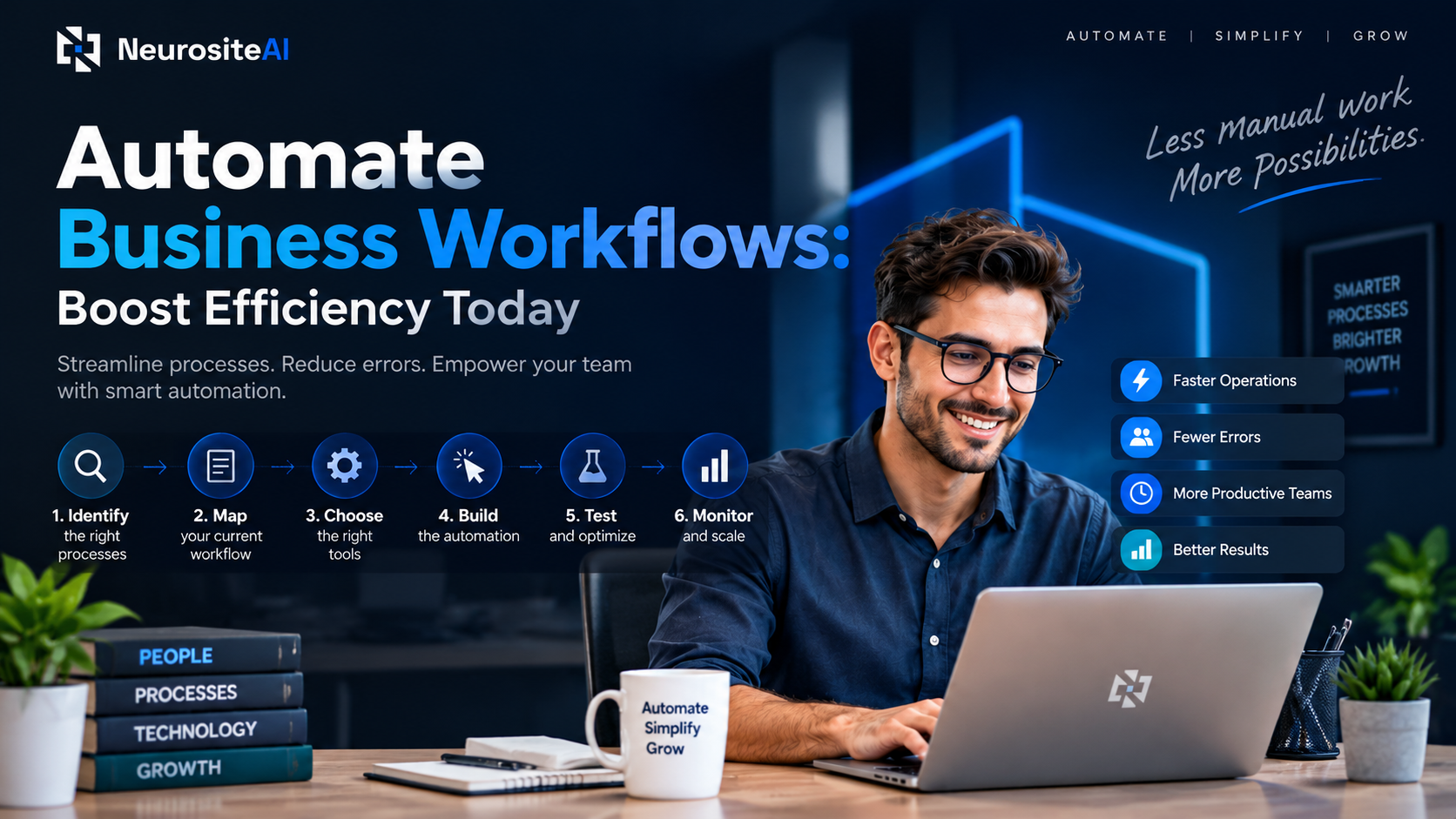
H2 — What a Modern AI Automation Workflow Looks Like
A simple lead-generation workflow might look like this:
Lead Discovery → Data Collection → AI Analysis → Lead Qualification → Human Review → Personalized Outreach → Follow-Up → CRM Update
Each step can be connected through APIs and automation platforms.
This creates a repeatable system where information moves automatically between different tools instead of being manually transferred by a team member.
H2 — Is AI Automation Right for Your Business?
AI automation can be particularly useful for businesses that:
Receive a large number of leads
Spend significant time on repetitive tasks
Depend on outbound sales
Manually manage CRM data
Have recurring administrative workflows
Need faster customer response times
Want to scale operations without increasing repetitive manual work
However, automation should begin with a clear business problem.
The goal should not be to automate everything simply because AI is available. The goal is to identify repetitive processes where automation can create measurable value.
H2 — Build Smarter Business Workflows with NeurositeAI
At NeurositeAI, we design AI-powered systems and digital products that help businesses automate repetitive processes and build more efficient workflows.
From lead generation and CRM automation to AI agents and custom software, we focus on creating solutions around the actual needs of each business.
If your team is spending hours every week on repetitive tasks, there may be an opportunity to turn that process into an automated workflow.
Ready to explore what you can automate? Start a project with NeurositeAI and let's build a smarter workflow for your business.

Senior SEO, AEO, AIO & GEO Specialist
Mithun is a senior SEO, AEO, AIO, and GEO specialist with 7+ years of experience specializing in technical SEO, semantic…
View full profile →Share this article